
Dartmoor's granite didn't stay on the moor. Stone quarried at Foggintor and Haytor travelled to a naval hero's column in London, a breakwater guarding Plymouth Sound, a king's statue in the City, and, after one final journey nobody in Devon planned for, a desert city in Arizona.
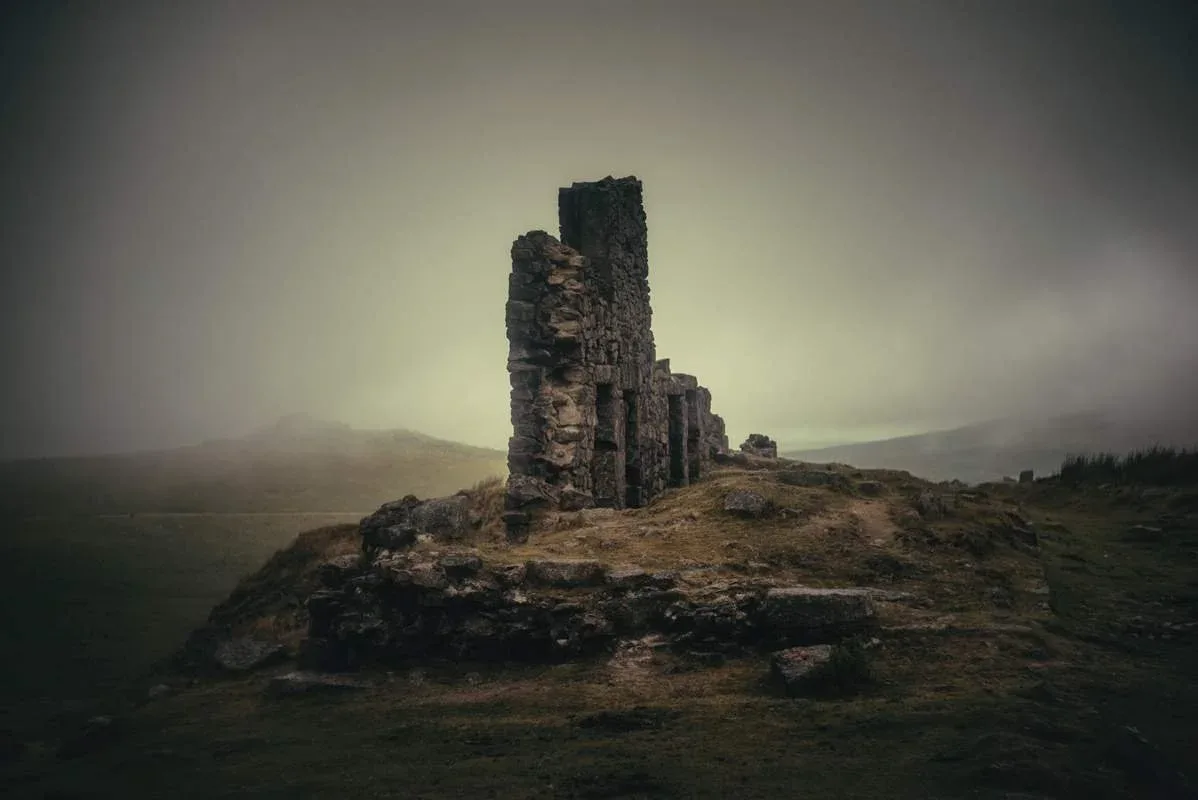
Walk the old tramway past Yellowmeade Farm towards Foggintor Quarry today and you'll find etched stone footings where steel tracks once carried granite blocks out of the ground. The quarry itself, once known as Royal Oak, sits flooded and quiet now. But in the nineteenth century this was one of the busiest working sites on Dartmoor, and its stone ended up in some surprising places.
Supplied much stone for Plymouth and its breakwater... the Nelson Monument in Trafalgar Square is built of Foggintor granite.
Foggintor granite had admirers among the people who actually built with it. William Johnson, addressing the British Association of Builders, called it the best stone in the country for steps, plinths, columns and cornices, for "all other purposes of architecture." Johnson and his brother, as it happens, owned most of the quarries on Dartmoor at the time, so he had every reason to say so.
A king in the City
The stone also travelled into the heart of the City of London. A report in The Builder in February 1845 records that the statue of William IV in King William Street was executed in Foggintor granite at a cost of £2,200. Peterhead granite would have been preferred for its colour, the report notes, but the asking price was too high.
Not every piece of Dartmoor granite made it to its destination. Near Swell Tor Quarry, corbels cut for a project can still be found abandoned beside the old tramway, never collected, for reasons nobody now remembers. It's a reminder that not every story of stone leaving the moor ends with a famous landmark.
The bridge that moved twice
The most travelled story belongs to Haytor granite and London Bridge. The bridge built from Dartmoor stone in the 1830s was itself dismantled in the 1960s and sold to American entrepreneur Robert P. McCulloch, who had it shipped stone by stone and rebuilt at Lake Havasu City, Arizona, where it still stands today. Dartmoor granite, quarried by hand on an English moor, ended up spanning an artificial channel in the Mohave Desert.
Explore where this stone came from at Foggintor Quarry, or follow its journey to the coast via the Stover Canal.